
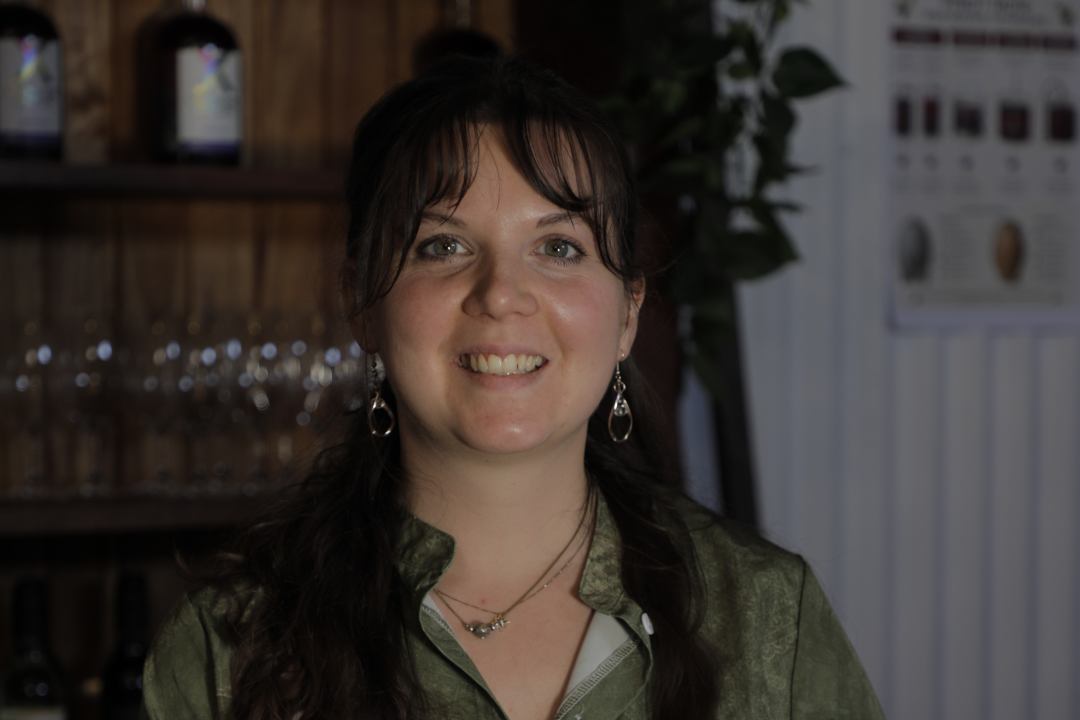
Lisa Zanette
SOMMELIER AT REDGUM WINE ESTATE
When did you realise you wanted to become a sommelier?
I was in my early twenties; it was a Sunday in spring. My boyfriend’s (Riccardo) parents invited us for lunch; we told them about our recent trip to Tuscany where we spent our days looking for small wineries and tasting as much red wine as possible. Riccardo mentioned that I wrote down the aromas and flavours of every wine we tasted. His mother said, ‘you should become a sommelier.’ I didn’t know it then, but those words stayed with me. The reason I had been filling that notebook was that my father was a winemaker; I wanted to discuss everything I had discovered with him. So perhaps the idea of becoming a sommelier was planted before that lunchtime revelation.
Please tell us about your career so far.
With a Master’s of Ancient Literature, I decided to follow that lunchtime suggestion. I enrolled in the three courses required to become a sommelier in Italy. In Venice I was fortunate enough to find my way into the wine world over a chance encounter with a Sicilian restaurateur living near me. Like most people in hospitality, I worked my way up through the ranks.
One year later, I found myself working in a small Venetian osteria devoted to natural Mediterranean wines. I had the opportunity to attend wine fairs, meet winemakers and most importantly, discover the story behind each wine. Eventually, my path brought me to Redgum Wine Estate.
What do you love most about being a sommelier?
Perhaps I most love the challenge of discovering what the person in front of me is smelling or tasting – sometimes even before they can articulate it. There is something exciting about recognising a familiar aroma through someone else’s experience or helping them find a word for something they can sense but not name. Every new bottle feels like a little mystery waiting to be explored.
Then there’s the other side of being a sommelier, sharing that discovery. I love explaining the story behind a wine, the people who made it, the place it came from and even the almost magical chemistry that takes place inside the bottle. For me, the real joy is discovering something unexpected and then helping someone else discover it too.
What is your favourite wine, and what food do you typically pair it with?
My favourite grape variety is an almost forgotten native of Liguria, Italy, called Rossese di Dolceacqua. Delicate, bright and versatile, it can be light and lively, perfect for aperitivo wine, or it can reveal a more generous, structured side. I have a weakness for pairing it with a medium aged Pecorino Romano.
The wine’s freshness and delicate tannins meet the salty, savoury cheese beautifully, creating a pairing that is irresistible and distinctly Italian.
Is there a specific process you follow when developing an experience?
I always start by asking ‘what do I want people to discover?’ I want to make wine accessible, without making it feel simplified. At the same time, I like giving people something more: a piece of knowledge, a story, a flavour or a perspective. Something that makes them think, ‘I wouldn’t have discovered this if I hadn’t come here.’
The best wine experiences are not about showing my knowledge. I always try to build around something that cannot simply be found on a shelf or searched online. It should feel personal, unexpected and leave people with the feeling that they’ve discovered something that belongs – for a moment – to them.
Is there any vintage you’re particularly proud of creating? Why?
It may be surprising after so many years of working with wine, but I have a soft spot for the 2024 vintage. It was a challenging year, certainly not one that would immediately be described as exceptional. Yet at Redgum, we were fortunate enough to see something truly special emerge. The wines are remarkably floral. Our Pinot Noir, for instance, carries an almost uncanny aroma of red roses, while the Shiraz is a celebration of lavender.
There is something wonderfully unexpected about finding such expressive perfume in wines born from such a difficult vintage. 2024 was a tricky year – which makes these wines even more precious.
How does the local climate/soil affect the wine?
Sometimes, you come across a place that feels destined to make wine. For me, Redgum is that place. We sit at a higher elevation, where temperatures are noticeably cooler. This is particularly beneficial for Pinot Noir, preserving its freshness and aromatics. Then there are the ocean breezes from the Peel Estuary, which we can see from the winery.
The Jarrah Forest behind provides shelter from strong winds while also helping with summer temperatures. Then, there’s the soil: a beautiful combination of gravel, for drainage, and white clay, to retain water for the vines. The clay also contributes to giving wines a little more body and texture than typically expected. Put all these elements together, and Redgum has a remarkably distinctive environment – where climate, landscape and soil work together almost effortlessly.
Which of your own varieties do you typically indulge in?
Chardonnay, without a doubt. That may sound almost provocative, particularly here in WA – where mentioning Chardonnay can start a lively debate! I believe it is one of the most versatile grape varieties in the world. When handled with restraint, Chardonnay can be fresh, zesty and citrus-driven. But when it undergoes malolactic fermentation, it reveals a different side of its personality: ripe stone fruit, cream and that subtle yoghurt-like texture.
What I love about Chardonnay is its ability to adapt to the moment. It can be the effortless, refreshing glass you share with friends before dinner for a deeply contemplative wine.